Press room » Press releases » Steelmakers back President von der Leyen’s climate and competitiveness agenda
Steelmakers back President von der Leyen’s climate and competitiveness agenda, urge more action to keep production in Europe
Recent updates
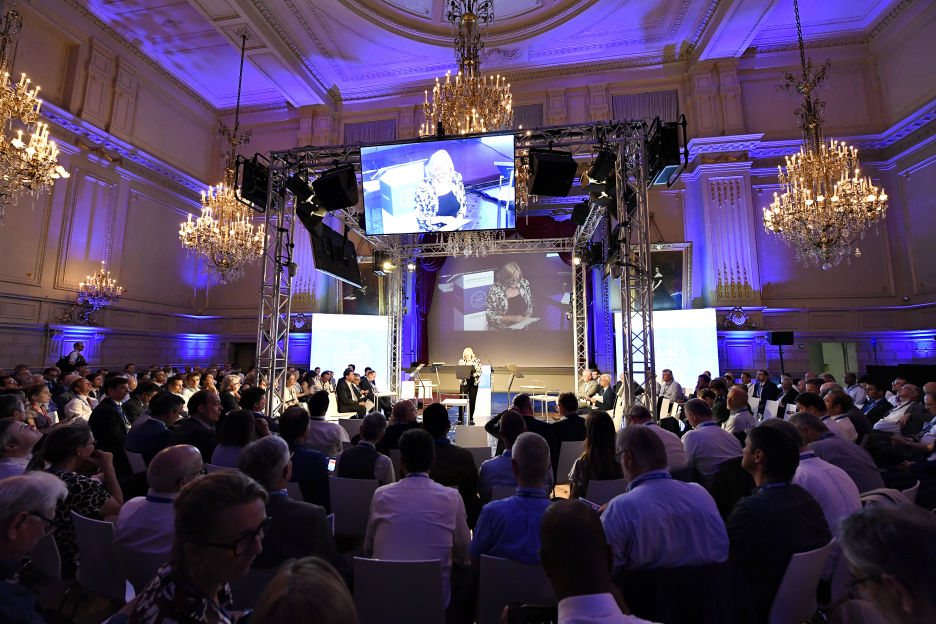
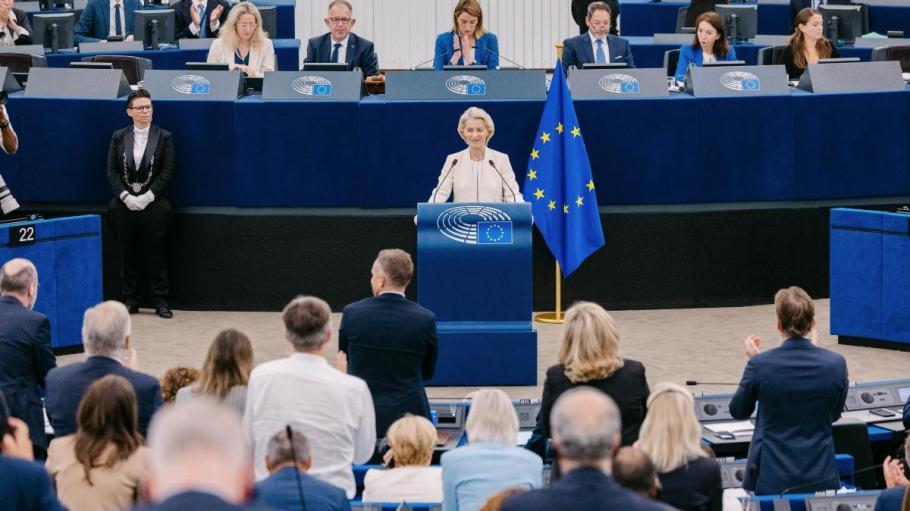
Brussels, 16 September 2026 - Europe’s steel industry has welcomed European Commission President Ursula von der Leyen’s focus on competitiveness, affordable energy and a level playing field, saying these conditions were vital to keep industrial investment and production in Europe.
Reacting to today’s State of the Union speech, the European Steel Association (EUROFER) particularly welcomed the recognition that structurally high energy prices and growing trade imbalances were threatening Europe’s ability to remain an industrial powerhouse. EUROFER argues that the focus must now shift to delivery: lower electricity costs, affordable hydrogen, lead markets for low-carbon Made-in-Europe steel and an ETS framework aligned with industrial reality. The Association said the Commission’s Steel and Metals Action Plan adopted last year, provides a blueprint for a more integrated European industrial policy and should be implemented across the steel value chain.
Axel Eggert, Director General of EUROFER, said: “President von der Leyen has rightly put competitiveness, climate and autonomy at the heart of Europe’s future - ambitions that cannot be delivered without a thriving industrial base. European steelmakers remain committed to climate neutrality: the technology is moving forward, but the business case must move forward with it. We need affordable energy and strong Made-in-EU lead markets if low-carbon steel is to be made here rather than simply consumed here. Valuable secondary raw materials should also remain within the EU economy rather than being exported to countries that do not have comparable climate ambitions or export restrictions.”
EUROFER said forthcoming decisions on the EU Emissions Trading System (ETS) will be critical. As the EU’s Carbon Border Adjustment Mechanism (CBAM) is introduced, the phase-out of free allocation should reflect whether it is effectively preventing carbon leakage and whether European producers have access to the energy and technologies needed to decarbonise competitively.
The Association also warned that rising carbon costs could shift the risk of carbon leakage further down the value chain, as more steel-intensive finished products are imported from countries operating under different carbon and trade conditions. EUROFER therefore supports stronger protection for relevant downstream products, alongside Made-in-Europe criteria that reward investment in low-carbon European production.
Mr. Eggert added: “A more realistic pace for withdrawing free allocation, where necessary, would not weaken Europe’s climate objectives. It would help ensure the ETS supports investment and emissions reductions without accelerating the loss of production. Europe does not have to choose between competitiveness and decarbonisation. If it wants greater autonomy, more renewable energy and a successful green transition, it needs the industrial capacity to deliver them. That means keeping steel made in Europe.”
Image copyright: European Commission - Audiovisual Service - 2026
Contact
David French, Spokesperson and Head of Communications, +32 2 738 79 35, (d.french@eurofer.eu)
About the European Steel Association (EUROFER)
EUROFER AISBL is located in Brussels and was founded in 1976. It represents the entirety of steel production in the European Union. EUROFER members are steel companies and national steel federations throughout the EU. The major steel companies and national steel federation of Turkey, Ukraine and the United Kingdom are associate members.
The European Steel Association is recorded in the EU transparency register: 93038071152-83.
About the European steel industry
The European steel industry is a world leader in innovation and environmental sustainability. It has a turnover of around €215 billion and directly employs around 298,000 highly-skilled people, producing on average 146 million tonnes of steel per year. More than 500 steel production sites across 22 EU Member States provide direct and indirect employment to millions more European citizens. Closely integrated with Europe’s manufacturing and construction industries, steel is the backbone for development, growth and employment in Europe.
Steel is the most versatile industrial material in the world. The thousands of different grades and types of steel developed by the industry make the modern world possible. Steel is 100% recyclable and therefore is a fundamental part of the circular economy. As a basic engineering material, steel is also an essential factor in the development and deployment of innovative, CO2-mitigating technologies, improving resource efficiency and fostering sustainable development in Europe.
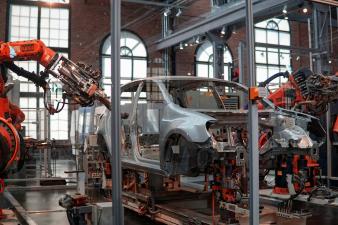
Proposed credit would allow European carmakers to meet 3% of their CO₂ targets through low-carbon steel made in the EU rising to 7.5% from 2035.
Brussels, 21 October 2026 - The European steel industry welcomes a compromise reached in the European Parliament yesterday on CO₂ standards for cars and vans, which includes a dedicated incentive for carmakers to use low-carbon steel Made in the EU.
As EU steel production rises, helping preserve up to 80,000 jobs, the industry reports €3.4 billion in investment decisions, with a further €2.4 billion expected by year-end.
Brussels, 1 October 2026 - The European Steel Association (EUROFER) has elected Geert Van Poelvoorde, Chairman of the Board of ArcelorMittal Europe Steel, as its new President. Taking office today, Mr Van Poelvoorde said stronger home markets across the steel value chain, secure access to export markets and a strong industrial base will be essential to delivering on the European Union’s ambitions for global competitiveness and strategic autonomy.
The European Steel Association (EUROFER)
172 Avenue de Cortenbergh
1000 Brussels
Belgium
Email: mail@eurofer.eu
Phone: +32 (0) 2 738 79 20