Publications » Archive » European Steel in Figures 2020
European Steel in Figures 2020
Downloads and links
Recent updates
European Steel in Figures 2020 is the European Steel Association’s (EUROFER) statistical guide. It shows a sector that has experienced a challenging year in 2019, with employment levels stable but demand beginning to fall off. In 2019, imports fell from the record rise seen in 2018 - in line with falling demand. The decline in production and demand will have an impact on future employment figures, as will the impact of the COVID-19 outbreak. Total employment – jobs directly or indirectly, or induced by the sector – now stands at 2.6 million. Total Gross Value Added is €140 billion.
This new European Steel in Figures 2020 guide updates the trade map, showing imports and exports from the EU in an easy-to-understand way, breaking down previously hard to read figures. Additionally, the sustainability section of the guide has been doubled in size and updated with the latest data, now including refreshed information on slag production by the steel industry and its use by other downstream sectors.
All these statistics help give an overview of the European steel industry today. Awareness of the employment, production, demand and trade challenges that face the sector ensure a greater understanding of our strategically important sector. With this in mind, I hope you enjoy using European Steel in Figures 2020.
Download this publication or visit associated links
As EU steel production rises, helping preserve up to 80,000 jobs, the industry reports €3.4 billion in investment decisions, with a further €2.4 billion expected by year-end.
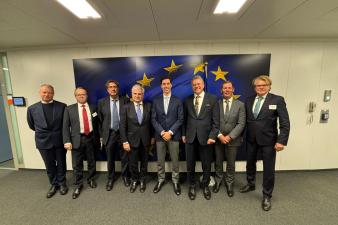
Brussels, 1 October 2026 - The European Steel Association (EUROFER) has elected Geert Van Poelvoorde, Chairman of the Board of ArcelorMittal Europe Steel, as its new President. Taking office today, Mr Van Poelvoorde said stronger home markets across the steel value chain, secure access to export markets and a strong industrial base will be essential to delivering on the European Union’s ambitions for global competitiveness and strategic autonomy.
Brussels, 1 October 2026 - Europe’s steel market remains under significant pressure, with exports falling sharply, production at historic lows and demand expected to remain almost flat in 2026, according to the European Steel Association’s (EUROFER) latest Economic and Steel Market Outlook 2026-2027. EU steel exports to third countries fell by 20% in the first half of 2026, with declines across all major export destinations covered by the report. At the same time, crude steel production continued to falter, after reaching a historic low of 125.8 million tonnes in 2025, while apparent steel consumption is forecast to grow by just 0.1% in 2026, before increasing by 2.3% in 2027.
The European Steel Association (EUROFER)
172 Avenue de Cortenbergh
1000 Brussels
Belgium
Email: mail@eurofer.eu
Phone: +32 (0) 2 738 79 20