Publications » Brochures, booklets or fact-sheets » Steel, the Backbone of Sustainability in Europe
Steel, the Backbone of Sustainability in Europe
Downloads and links
Recent updates
Modern society would be impossible without steel. The European Steel Industry Vision is based on the decisive contribution of steel to European socio-economic growth and sustainable production, as well as the Circular Economy, which is expected to become even more important in the future.
In the short term, the sustainability of the European steel industry will depend upon meeting the formidable challenge of remaining economically viable against a background of excess global supply.
In the short, medium and long term, the European steel industry:
Steel has significant social value and is by far one of the most important, multi-functional and adaptable materials.
Download this publication or visit associated links
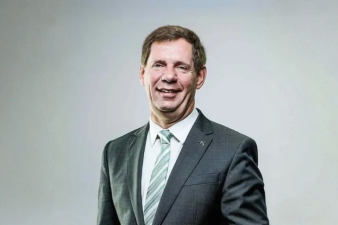
Brussels, 1 October 2026 - The European Steel Association (EUROFER) has elected Geert Van Poelvoorde, Chairman of the Board of ArcelorMittal Europe Steel, as its new President. Taking office today, Mr Van Poelvoorde said stronger home markets across the steel value chain, secure access to export markets and a strong industrial base will be essential to delivering on the European Union’s ambitions for global competitiveness and strategic autonomy.
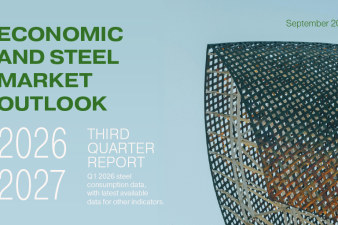
Brussels, 1 October 2026 - Europe’s steel market remains under significant pressure, with exports falling sharply, production at historic lows and demand expected to remain almost flat in 2026, according to the European Steel Association’s (EUROFER) latest Economic and Steel Market Outlook 2026-2027. EU steel exports to third countries fell by 20% in the first half of 2026, with declines across all major export destinations covered by the report. At the same time, crude steel production continued to falter, after reaching a historic low of 125.8 million tonnes in 2025, while apparent steel consumption is forecast to grow by just 0.1% in 2026, before increasing by 2.3% in 2027.
Ship recycling
The European Steel Association (EUROFER)
172 Avenue de Cortenbergh
1000 Brussels
Belgium
Email: mail@eurofer.eu
Phone: +32 (0) 2 738 79 20