Publications » Position papers » EUROFER views on the International Procurement Instrument
EUROFER views on the International Procurement Instrument
Downloads and links
Recent updates
While the EU is considered one of the most open and transparent procurement markets in the world, this is often not reciprocated by the EU’s trading partners. This is creating a growing lack of level-playing field in world procurement markets, as third countries are increasingly restricting access to their markets while their companies are winning significant contracts in the EU, sometimes even on unfair pricing terms or by challenging EU public procurement rules.
In 2012, the Commission proposed the creation of an International Procurement Instrument (IPI). After a legislative deadlock, the Commission presented a revised proposal in 2016. In March 2019, in the context of a review of relations with China, the Commission called on the Council and Parliament to revive the trilogues based on the revised proposal, and adopt the IPI before the end of 2019.
In the light of the revival of the discussions on the 2016 proposal, EUROFER would like to highlight its support to the International Procurement Instrument and urge the European institutions to reach an agreement in the shortest possible timeframe to ensure new market openings for European companies and a level playing field in both the EU and third countries’ markets.
Download this publication or visit associated links
As EU steel production rises, helping preserve up to 80,000 jobs, the industry reports €3.4 billion in investment decisions, with a further €2.4 billion expected by year-end.
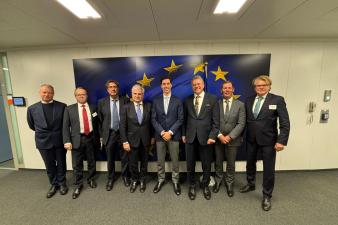
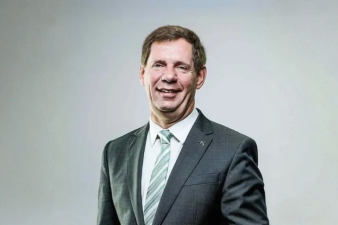
Brussels, 1 October 2026 - The European Steel Association (EUROFER) has elected Geert Van Poelvoorde, Chairman of the Board of ArcelorMittal Europe Steel, as its new President. Taking office today, Mr Van Poelvoorde said stronger home markets across the steel value chain, secure access to export markets and a strong industrial base will be essential to delivering on the European Union’s ambitions for global competitiveness and strategic autonomy.
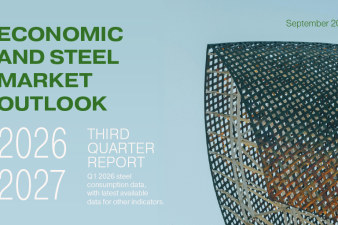
Brussels, 1 October 2026 - Europe’s steel market remains under significant pressure, with exports falling sharply, production at historic lows and demand expected to remain almost flat in 2026, according to the European Steel Association’s (EUROFER) latest Economic and Steel Market Outlook 2026-2027. EU steel exports to third countries fell by 20% in the first half of 2026, with declines across all major export destinations covered by the report. At the same time, crude steel production continued to falter, after reaching a historic low of 125.8 million tonnes in 2025, while apparent steel consumption is forecast to grow by just 0.1% in 2026, before increasing by 2.3% in 2027.
The European Steel Association (EUROFER)
172 Avenue de Cortenbergh
1000 Brussels
Belgium
Email: mail@eurofer.eu
Phone: +32 (0) 2 738 79 20